
Have you ever scrolled through social media and stumbled upon a word that gets thrown around so much it starts to lose its meaning? For me, that word is “fascist.” I see it in comment sections, political headlines, and heated dinner table debates. But here’s the thing—I realized I wasn’t totally sure what it actually meant.
So I went down a rabbit hole. I read history books, academic articles, and even a few speeches from the 1920s and 1930s. What I found surprised me. The story of fascism—or “fascisterne” as it’s called in some historical texts—isn’t just about World War II and mustaches. It’s about human nature, fear, and what happens when societies feel like they’re falling apart.
In this post, I’m going to break down fascism in plain English. We’ll look at where it came from, what it actually means, and why understanding it today matters more than ever. No jargon. No judgment. Just facts and real talk.
What Is Fascism, Really?
Let’s start with the basics. Fascism is a political ideology that’s hard to pin down because it changes depending on the country and the leader . But most historians agree on a few core ingredients.
At its heart, fascism is extreme nationalism—the belief that your nation is not just better than others, but that it’s in danger of being weakened by outsiders . It’s built on:
-
A powerful leader (often called “Il Duce” or “Der Führer”) who speaks for the people
-
Violence as a tool for solving problems
-
Hatred of democracy and communism equally
-
Using fear to unite people against a common enemy
I remember reading Mussolini’s speeches for the first time and being struck by how emotional they were. He wasn’t making logical arguments. He was selling feelings—pride, anger, belonging. That’s the thing about fascism: it doesn’t appeal to your brain. It appeals to your gut.
Where Did Fascism Come From? (Hint: It Didn’t Start with Hitler)
Here’s something that blew my mind when I learned it: fascist ideas were floating around Europe decades before Mussolini marched on Rome .
Think of it like a recipe that took a long time to perfect.
The 19th Century Thinkers You’ve Never Heard Of
In the 1800s, writers and philosophers across Europe were already cooking up fascist ideas . In France, guys like Joseph de Maistre argued that the Enlightenment—you know, the movement that gave us democracy and human rights—was actually destroying society. He thought we needed strong authority and traditional religion to keep people in line .
Meanwhile in Germany, folks like Paul de Lagarde and Julius Langbehn were writing about racial purity and blaming Jews for society’s problems . Sound familiar?
What’s wild is that these weren’t fringe weirdos. They were best-selling authors and respected thinkers . Their ideas about race, nationalism, and the “decadence” of modern life spread through newspapers, magazines, and universities.
The Spark: World War I
So these ideas were floating around, but they needed a match. That match was World War I .
Imagine living through that war. Millions dead. Empires collapsed. Economies shattered. People came home from the trenches feeling betrayed by their leaders .
In Italy, veterans like Benito Mussolini felt the peace treaty cheated them out of land they’d been promised . In Germany, the “stab in the back” myth spread—the idea that Jews and communists had sabotaged the war effort .
Neither was true. But they felt true. And that’s what mattered.
The Rise of Mussolini: A Cautionary Tale
Let me tell you about how Mussolini actually came to power, because it’s not the story I expected.
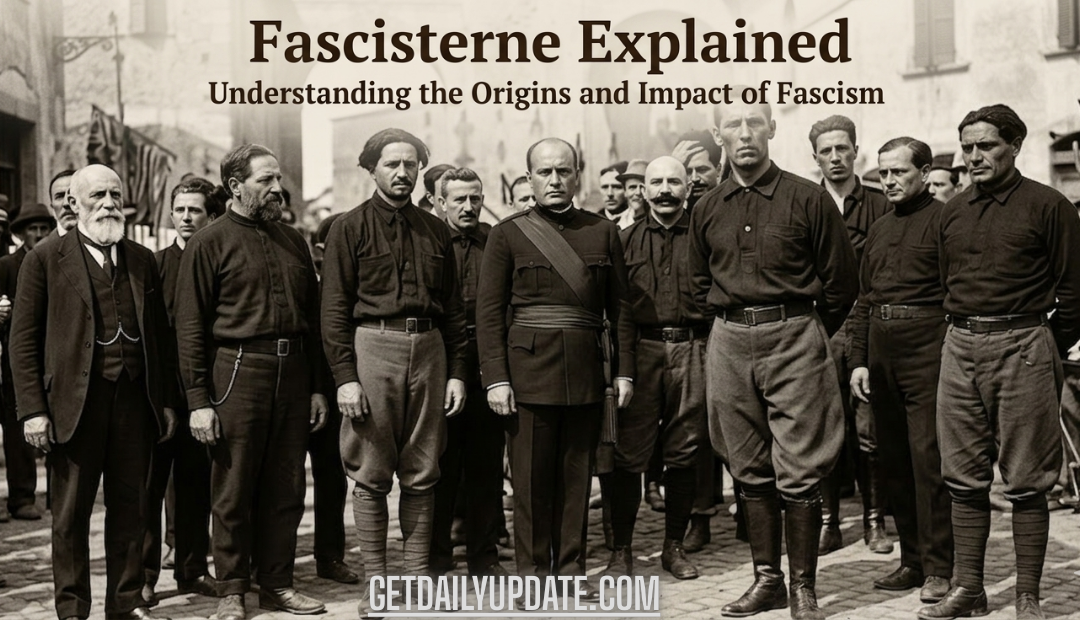
In 1919, Mussolini started his fascist movement in Milan with maybe 100 guys . They wore black shirts, formed street gangs, and beat up socialists and communists . Sound like a fringe group, right?
But Italy in 1919 was a mess. Workers were striking. Poor peasants were seizing land from rich landlords . The middle class was terrified of a communist revolution like the one in Russia .
And here’s the part that gets me: business leaders started funding the fascists . Factory owners paid Mussolini’s thugs to break up strikes. The police looked the other way when fascists attacked leftists . Conservatives thought they could use Mussolini—control him, keep him in check.
By 1922, Mussolini was Prime Minister. The king appointed him, hoping he’d be a bulwark against communism . Within four years, he’d destroyed democracy entirely .
The lesson? Fascists rarely take power by themselves. They’re often helped by traditional conservatives who think they can control the monster .
What Made Fascism Different in Germany and Italy?
You might be wondering: was Nazism just German fascism?
Yes and no.
Both movements shared core beliefs—hatred of democracy, worship of the leader, use of violence . Both grew from economic crisis and fear of communism .
But Nazism added something extra: racial science . Hitler believed Germans were a “master race” destined to rule and expand eastward . This wasn’t just nationalism—it was a genocidal worldview that led to the Holocaust .
Italian fascism was brutal too. Mussolini’s regime killed opponents and invaded Ethiopia in 1935 . But it never developed the systematic, industrial killing machine that Nazi Germany did.
Here’s something I think about a lot: both movements prove that ordinary people—teachers, doctors, civil servants—can get swept up in something terrible . The Nazis drew support from professors and lawyers, not just uneducated masses .
Is Fascism Making a Comeback?
Okay, let’s talk about today. You’ve probably heard pundits call various politicians “fascist.” Is that fair?
Professor Larry Diamond from Stanford offers a useful way to think about it. He argues we don’t have “fully formed, classic fascism” today . But we do see “fascistic features” spreading worldwide .
What does that mean? Think about:
-
Leaders who claim to speak for “the real people” against outsiders
-
Attacks on the press and independent courts
-
Blaming immigrants or minorities for society’s problems
-
Nostalgia for a mythical past when the country was “great”
Professor Thomas Hansen points to leaders like Modi in India, Orbán in Hungary, and Trump in the United States as examples of this trend . These leaders push back against globalization, multiculturalism, and liberal democracy .
One scholar I read described “postmodern fascism” as a nostalgia for lost privileges—the idea that certain groups (white men, native-born citizens, etc.) have been robbed of what’s rightfully theirs .
I don’t know about you, but I’ve definitely heard that language in political speeches. “Take our country back.” “Real Americans.” “They’re stealing your future.”
Why This Matters to You and Me
Here’s why I wrote this post. Understanding fascism isn’t just an academic exercise. It’s about recognizing patterns.
The conditions that helped fascism rise in the 1920s and 30s—economic anxiety, fear of change, distrust of institutions, anger at outsiders—exist today . We’re not doomed to repeat history. But we have to learn from it.
Three things I’ve taken away from my reading:
-
Fascism feeds on fear. When people feel threatened, they’ll trade freedom for security .
-
Normal people enable it. The bureaucrats who processed deportation orders, the teachers who taught racist science, the neighbors who looked away—they weren’t monsters. They were ordinary humans .
-
Democracy requires work. It’s not automatic. It needs citizens who pay attention, question authority, and stand up for others .
How to Spot Fascist Thinking Today
I’m not here to call names or pick fights. But I do think it’s helpful to have a checklist when you hear political rhetoric.
Watch for these warning signs :
-
Us vs. them language that divides people into “true nationals” and enemies
-
Calls for violence against political opponents or minority groups
-
Rejection of facts from newspapers, courts, or experts
-
Cult of personality around a strong leader who can’t be criticized
-
Nostalgia for a past that probably wasn’t as great as claimed
Again, seeing one of these doesn’t mean someone’s a fascist. But when you see several together, it’s worth paying attention.
What Can We Actually Do?
I’m an optimist at heart. Learning about dark parts of history makes me want to find light.
Here are small, practical things we can do:
-
Learn real history. Not the simplified version. The messy, complicated truth .
-
Talk to people who disagree with you. Fascism grows when we retreat into bubbles and see opponents as enemies rather than fellow citizens.
-
Support democracy. Vote. Volunteer. Pay attention to local politics where decisions actually affect lives .
-
Push back against scapegoating. When someone blames immigrants or minorities for complex problems, ask questions. Who benefits from this story?
Final Thoughts
I started this journey because I wanted to understand a word I heard everywhere. I ended up learning about human nature—about what happens when fear outweighs hope, and when people trade freedom for the promise of security.
“Fascisterne” isn’t just a historical term. It’s a warning about what we’re capable of, both good and bad.
I don’t have all the answers. But I believe that understanding where we’ve been helps us figure out where we’re going. And that starts with conversations like this one.
If you want to read more information, visit.





Leave a Reply