
If you run a business in Chile that deals with combustibles líquidos—think gas stations, industrial plants, or even large-scale transport—you’ve probably heard the rumblings about Decreto Supremo 160. I’ll be honest: when I first heard about this regulation, my eyes glazed over. Legal jargon in Spanish? No, thank you.
But here’s the thing. After digging into it (and making a few mistakes along the way), I realized that Decreto Supremo 160 isn’t just bureaucratic red tape. It’s actually a solid framework designed to keep people safe. Whether you’re a seasoned business owner or just getting started, understanding this decree is crucial.
In this guide, I’m going to walk you through everything I’ve learned about Decreto Supremo 160 in a way that actually makes sense. Let’s dive in.
What Exactly is Decreto Supremo 160?
So, what are we talking about? Officially, Decreto Supremo 160 (often abbreviated as DS 160) refers to the “Reglamento de Seguridad para las Instalaciones y Operaciones de Producción y Refinación, Transporte, Almacenamiento, Distribución y Abastecimiento de Combustibles Líquidos.”
Whew, that’s a mouthful, right?
In plain Spanish, it’s the safety rulebook for handling liquid fuels. It was put into effect by the Ministerio de Economía, Fomento y Reconstrucción back in 2008 . The goal? To make sure that everything from the giant tanks at a refinery to the little pump at your local gas station is safe for workers and the community.
It’s important to note that there are other “Decreto 160” variations out there (like for social services or transport), but when people in the industrial sector talk about DS 160, they are almost always talking about this fuel safety regulation .
Why Should You Care?
Look, I’m not a safety inspector, and I don’t like following rules just for the sake of it. But after visiting a friend’s facility that had a close call a few years ago, I became a true believer. Decreto Supremo 160 sets the minimum standards to prevent disasters. If you handle fuel, you have to comply—or face serious fines.
Key Requirements of the New Regulations
When I first read through the modifications to the decree, I felt overwhelmed. But once you break it down, it’s really about three main things: the hardware (tanks), the paperwork (certification), and the people (training).
1. Tank and Infrastructure Standards
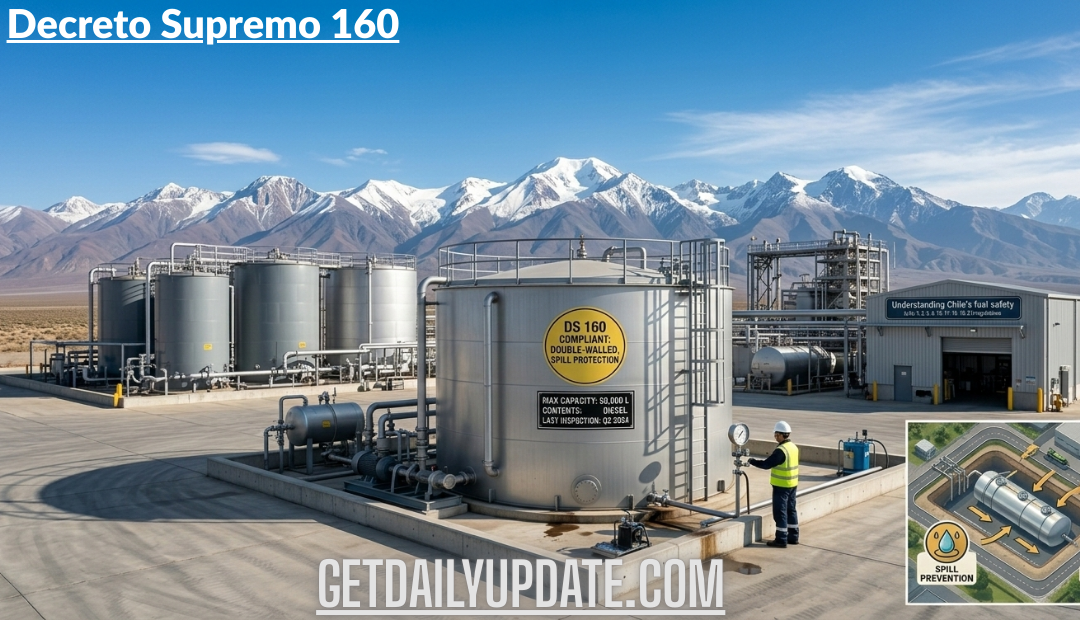
This is the big one. The decree is very specific about the tanks you use for almacenamiento de combustibles líquidos .
-
Double Walls: Many new installations require double-walled tanks to prevent leaks.
-
Material Quality: You can’t just use any old metal container. The materials must meet specific anti-corrosion standards.
-
Maintenance: Regular inspections aren’t just suggested; they’re mandatory.
Actionable Tip: Don’t wait for an inspection to find out your tank is rusty. I recommend doing a visual check of all your above-ground storage tanks every month. Note it down in a logbook. It sounds old-school, but it saves headaches later.
2. The Certification Process (Entidades Certificadoras)
Here’s where a lot of people get tripped up. You can’t just say “I’m safe.” You need proof. The regulations require that your installations are reviewed by authorized entidades certificadoras .
Think of these entities as independent referees. They come in, check that your setup meets the technical specs of DS 160, and issue a certificate. Without that piece of paper, you’re technically operating illegally.
3. Operational Safety Procedures
It’s not just about the equipment; it’s about how you use it. The decree also covers operational protocols. This includes things like:
-
How to handle fuel during delivery.
-
Emergency shutdown procedures.
-
Signage (you need the right warnings everywhere).
How to Ensure Your Business is Compliant
Okay, let’s get practical. If you’re reading this and thinking, “Uh oh, I need to check my compliance,” here is a step-by-step plan based on my own experience helping a buddy get his workshop up to code.
Step 1: Get a Copy of the Text
Don’t rely on rumors. Head over to the official library or sites like vLex.cl to read the actual text of Decreto 160 . Look specifically for the version from the Ministerio de Economía, Fomento y Turismo .
Step 2: Hire a Certified Professional
This is not a DIY project. You need an engineer or a consulting firm that specializes in safety compliance. They live and breathe this stuff. They’ll spot issues you’d never notice.
Step 3: Conduct a Gap Analysis
Walk through your facility with your consultant. Compare what you have versus what the DS 160 demands. Make a list of the gaps.
Step 4: Make the Fixes
This is the hard part—spending the money. Whether it’s buying new tanks or updating your electrical wiring, get it done. Remember, this is an investment in safety.
Step 5: Schedule the Certification
Once the fixes are made, call in the entidades certificadoras to do the official review. Get that certificate and keep it somewhere safe!
Personal Opinion: I know it feels like a hassle, but going through this process actually gave my friend peace of mind. He used to lie awake worrying about a leak. Now, he knows his workshop is solid.
Common Challenges and How to Overcome Them
I won’t sugarcoat it: complying with Decreto Supremo 160 isn’t always easy. Here are the two biggest roadblocks I see people hit:
-
The Cost: Upgrading tanks is expensive.
-
Solution: Look at it as a long-term investment. Think about the cost of a fine, or worse, an environmental cleanup. The prevention is almost always cheaper than the cure.
-
-
Finding the Info: The legal text is dense.
-
Solution: Don’t read the law alone. Join industry groups or forums. Talk to other business owners. Ask your consultant to explain it to you in simple terms—that’s what you’re paying them for.
-
Conclusion
Look, regulations like Decreto Supremo 160 can be intimidating. I totally get it. There are days when it feels like the government just wants to make our lives harder. But when it comes to handling dangerous materials like liquid fuels, having a clear, strict rulebook is actually a good thing.
This decree helps ensure that everyone goes home safe at night. It protects our communities and our environment. By taking the time to understand it and comply with it, you’re not just avoiding a fine—you’re building a better, safer business.
I hope this guide helped clear up some of the confusion. Have you dealt with DS 160 recently? I’d love to hear about your experience—drop a comment below! And if you found this helpful, share it with a friend who’s also wrestling with these rules.





Leave a Reply