
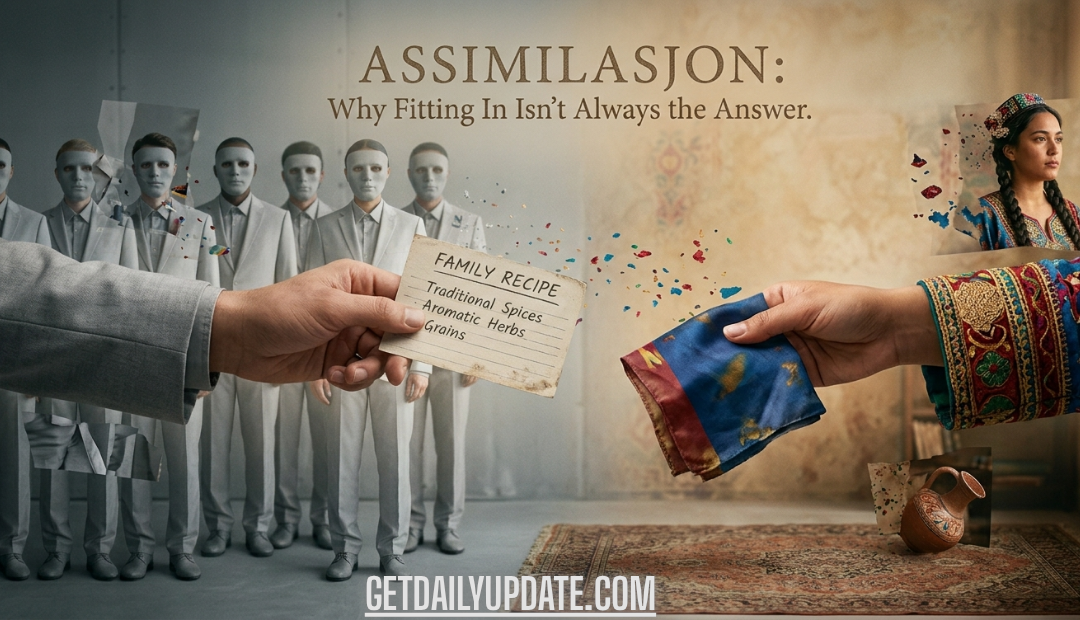
I remember moving to a new town when I was a kid. I thought the only way to make friends was to dress exactly like everyone else, listen to the same music, and pretend I didn’t like my old hobbies. Looking back, I wasn’t just trying to fit in—I was trying to assimilate. And honestly? It felt exhausting.
If you’re reading this, you might be wondering about the concept of assimilasjon. Maybe you’re moving to a new country, starting a new job, or just feeling the pressure to “blend in.” It’s a topic that comes up a lot when we talk about culture, identity, and belonging.
Today, I want to break down what assimilasjon actually means, why it’s different from integration, and how we can find a balance between adapting to a new environment and staying true to who we are. Let’s dive in.
What Exactly Is Assimilasjon?
At its core, assimilasjon is the process where a person or a group adopts the cultural traits of another group. Usually, it’s about a minority group taking on the habits, language, and values of a dominant culture—often to the point where their original identity fades.
Think of it like a drop of food coloring in a big glass of water. Eventually, the color spreads out and disappears. The drop is no longer visible. That’s assimilasjon in a nutshell.
But here’s the tricky part. In many conversations, especially around immigration and community building, assimilasjon gets confused with “inclusion.” They aren’t the same thing, and the difference matters more than you might think.
Why the Pressure to Assimilate Can Feel Heavy
I’ve seen this happen to friends who moved to new countries. There’s this unspoken rule: “When in Rome, do as the Romans do.”
On the surface, that sounds polite. But when it becomes a demand—forget your language, forget your food, forget your traditions—it starts to hurt.
When we push assimilasjon too hard, a few things happen:
-
People feel like they have to hide parts of their identity.
-
The community loses out on diversity and new perspectives.
-
It creates a power imbalance where one culture is seen as “right” and others are “wrong.”
I’m not saying we shouldn’t learn the language of the place we live or respect local customs. That’s just being a good neighbor. But there’s a big difference between adapting and erasing.
Assimilasjon vs. Integration: What’s the Difference?
This is where things get interesting. People often use these words interchangeably, but they lead to very different outcomes.
-
Assimilasjon is a one-way street. The newcomer does all the changing. The existing community stays exactly the same.
-
Integration is a two-way street. The newcomer adapts, but the existing community also adapts to welcome them. It’s about meeting in the middle.
![A two-way street sign with different cultural symbols pointing toward a shared destination]
Alt text: Assimilasjon vs integration concept – a two-way street symbolizing mutual cultural exchange
(Suggested image size: 1200×800. Source: Pixabay)
In an integrated society, you might celebrate traditional holidays from the new country and share your own cultural festivals with your neighbors. It’s about adding to the mix, not disappearing into it.
3 Practical Steps to Navigate Assimilasjon (Without Losing Yourself)
If you’re currently feeling that pressure to “blend in,” whether in a new school, workplace, or country, here are a few things I’ve learned that might help.
1. Learn the “Why” Behind the Rules
Instead of just copying what everyone else does, try to understand why they do it.
-
If your colleagues always go out for coffee at 10 a.m., find out if it’s just about caffeine or if it’s about building relationships.
-
If you’re learning a new language, don’t just memorize words. Learn the idioms and jokes.
This helps you adapt in a way that feels meaningful, not mechanical. You’re not just mimicking; you’re understanding.
2. Find Your “Third Space”
This is a tip I give to anyone feeling isolated. You don’t have to choose between “your old culture” and “your new culture.” Find a third space where they overlap.
Look for:
-
Book clubs reading translated literature.
-
Cooking classes that fuse different cuisines.
-
Community groups specifically for expats or first-generation families.
These spaces remind you that you aren’t alone. Plenty of people are navigating assimilasjon without giving up their roots.
3. Share Your Story
This might sound scary, but it’s the most powerful thing you can do. When you share a tradition, a food, or a story from your background, you’re inviting others to integrate with you.
I once brought a dish from my grandmother’s recipe to a work potluck. I was nervous people would think it was weird. Instead, I spent the whole lunch explaining the story behind it. People didn’t just eat the food—they connected with my story. It changed how they saw me.
My Personal Anecdote:
When I first started writing about culture, I was terrified of sounding “too different.” I thought I had to write exactly like everyone else. But the moment I stopped trying to force assimilasjon on my writing style and started writing like me—using my own voice, my own little jokes—my audience grew. People don’t connect with perfect copies. They connect with real humans.
How Communities Can Embrace Inclusion Over Assimilasjon
It’s not just on individuals to figure this out. If you’re a leader, a teacher, or just someone who wants to make their community more welcoming, you have a role to play.
Instead of expecting newcomers to adapt 100%, try these approaches:
-
Learn to pronounce names correctly. It sounds small, but it shows respect for identity.
-
Celebrate different holidays. If you have a calendar at work or school, acknowledge a variety of cultural celebrations.
-
Ask, don’t assume. Instead of saying, “Where are you really from?” try, “What’s your background?” or “What traditions are meaningful to you?”
These small shifts move us away from forced assimilasjon and toward genuine inclusion.
![A diverse group of people smiling and sharing food around a table]
Alt text: Diverse community celebrating inclusion and cultural exchange
(Suggested image size: 1200×800. Source: Unsplash)
Conclusion: Belonging is Better Than Blending In
At the end of the day, assimilasjon asks us to become smaller to fit in. But belonging asks us to show up fully.
If you’re currently navigating a new culture, give yourself grace. You don’t have to have it all figured out. You can learn the local language and speak your mother tongue at home. You can embrace new traditions and hold onto the old ones.





Leave a Reply