
You’ve probably seen the phrase “wat wax” pop up online and wondered… what on earth is that? I’ll be honest—I had to double-check it myself the first time. Turns out, it’s just a funny, common typo for ear wax. (Blame autocorrect or fast thumbs.)
But here’s the real problem: most of us don’t know much about ear wax. When does it become too much? What are the warning signs of a blockage? And—most importantly—how do you clean your ears safely without making things worse?
In this post, I’ll break down everything you need to know about wat wax (ear wax). You’ll learn what causes buildup, the red flags to watch for, and the only cleaning methods that actually work without hurting your ears. Let’s dig in.
What Exactly Is Wat Wax (Ear Wax)?
First things first: ear wax (or “cerumen” if you want to get fancy) isn’t dirt. Your body makes it on purpose. It’s a natural, waxy substance produced by glands in your ear canal.
Think of it like a self-cleaning oven for your ears. Gross? A little. Useful? Absolutely.
Why Do We Even Have Ear Wax?
Ear wax does three big jobs:
-
Traps dust, dirt, and bugs before they reach your eardrum
-
Keeps ear canal skin moist (dry ears = itchy and irritated)
-
Fights off germs thanks to natural antibacterial properties
So a little wat wax is actually a good thing. The trouble starts when your body makes too much, or when it gets pushed deep inside where it doesn’t belong.
Common Causes of Excessive Ear Wax Buildup
Not everyone gets clogged ears. But if you do, one of these might be why:
-
Using cotton swabs (Q-tips) – I know, I know. They feel so satisfying. But they usually push wax deeper instead of removing it.
-
Wearing hearing aids or earbuds – These block the natural migration of wax out of your ear.
-
Narrow or hairy ear canals – Some people are just born with tighter passages. Thanks, genetics.
-
Older age – Ear wax gets drier and harder as you age, making it tougher to move out naturally.
-
Frequent swimming or humid environments – Moisture can make wax swell and compact.
I learned this the hard way after a summer of wearing earbuds for daily runs. One morning I woke up feeling like my left ear was stuffed with cotton. Spoiler: it was wax.
Warning Signs You Might Have a Wat Wax Blockage
How do you know if it’s just a little wax or a full-on clog? Look for these symptoms:
-
Muffled hearing – Sounds like you’re underwater or wearing an earplug.
-
Earache or a feeling of fullness – Not sharp pain, just a dull pressure.
-
Ringing in your ear (tinnitus) – That annoying buzz or hiss that won’t quit.
-
Itchiness or drainage – Sometimes a little fluid or odor escapes.
-
Dizziness – In severe cases, a wax plug can mess with your balance.
-
Cough – A nerve in your ear can trigger a tickle in your throat.
If you have any of these, don’t panic. Most blockages are easy to fix. But please—put down the bobby pin.
Safe Cleaning Methods for Wat Wax (Do’s and Don’ts)
Let me share a quick personal story. Years ago, I had a stubborn wax blockage. I grabbed a paperclip (I know, I know), straightened it out, and went digging. I didn’t hurt my eardrum—thank goodness—but I did pack the wax in so tight that I needed a doctor to flush it out. Embarrassing and painful.
So please learn from my stupidity.
What Works (Safe Methods)
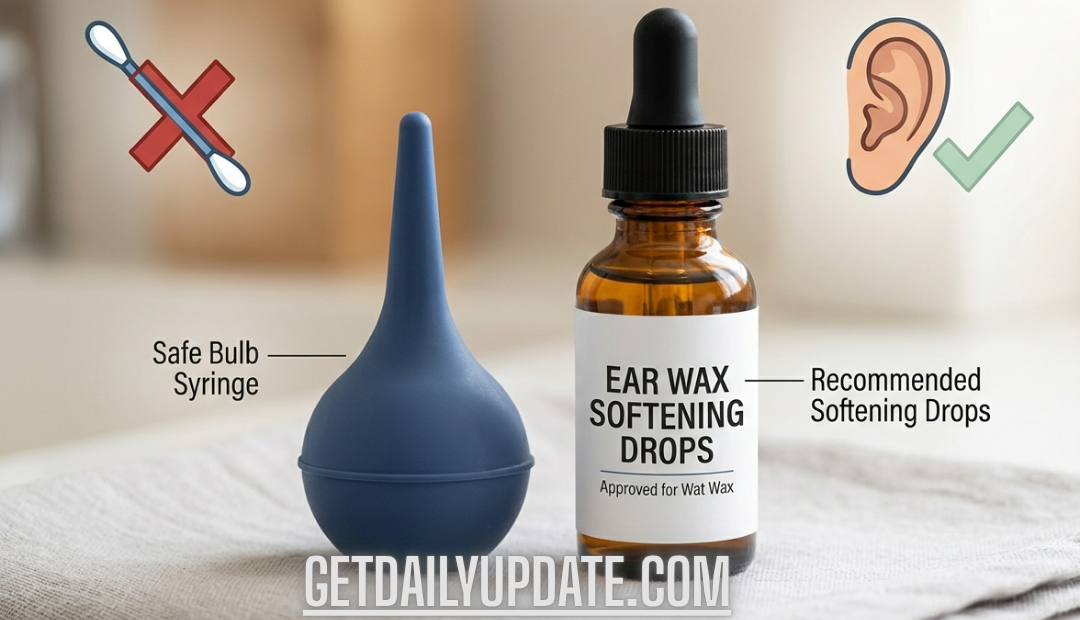
1. Over-the-counter ear drops
Look for drops with carbamide peroxide or glycerin. They soften the wax so it can drain naturally. Use as directed—usually 5–10 drops twice a day for a few days.
2. Warm water irrigation (with a bulb syringe)
After softening with drops, gently squirt body-temperature water into your ear canal. Tilt your head, let it sit, then tilt the other way to drain. Only do this if you’ve never had ear surgery or a ruptured eardrum.
3. Micro-suction or curettage (at a doctor’s office)
This is the gold standard. An ENT or nurse uses a tiny vacuum or loop tool to remove the wax in seconds. No pain, no water, no mess.
What to Avoid (Seriously, Don’t)
-
Cotton swabs – They push wax deeper and can scratch your ear canal.
-
Ear candles – They don’t work. Studies show they leave candle wax inside your ear and can cause burns. (Source: Mayo Clinic)
-
Hairpins, keys, or any sharp object – One slip and you could puncture your eardrum.
-
Water flossers or high-pressure irrigators – Too much force can damage delicate ear structures.
When to See a Doctor Instead of DIY
Most ear wax issues can be handled at home. But if you notice any of these, make an appointment:
-
Severe ear pain or bleeding
-
Sudden hearing loss
-
Discharge that looks like pus or blood
-
Dizziness that won’t go away
-
Ringing after trying home treatments
Also, if you’ve had ear surgery, a perforated eardrum, or ear tubes, never put anything in your ear without a doctor’s OK.
Final Thoughts & A Simple Ear Care Routine
Here’s what I do now to keep my wat wax in check without overdoing it:
-
Wipe the outside of my ear with a warm washcloth after showering
-
Avoid sticking anything inside my ear canal (yes, even my pinky)
-
Use ear drops once a month if I feel any buildup starting
-
See my doctor every year for a quick peek during my checkup
Your ears are amazing, self-cleaning machines. Most of the time, the best thing you can do is leave them alone. But when they do get clogged, now you know exactly how to handle it—safely.





Leave a Reply