
Let’s be honest for a second. Data can be a headache.
I remember working with a small e-commerce brand a few years ago. We had sales data in one spreadsheet, customer emails in another, and website analytics in a third. Every Monday morning, I’d spend two hours just copying and pasting numbers to figure out how we did the week before. It was boring, slow, and honestly? We probably made mistakes without realizing it.
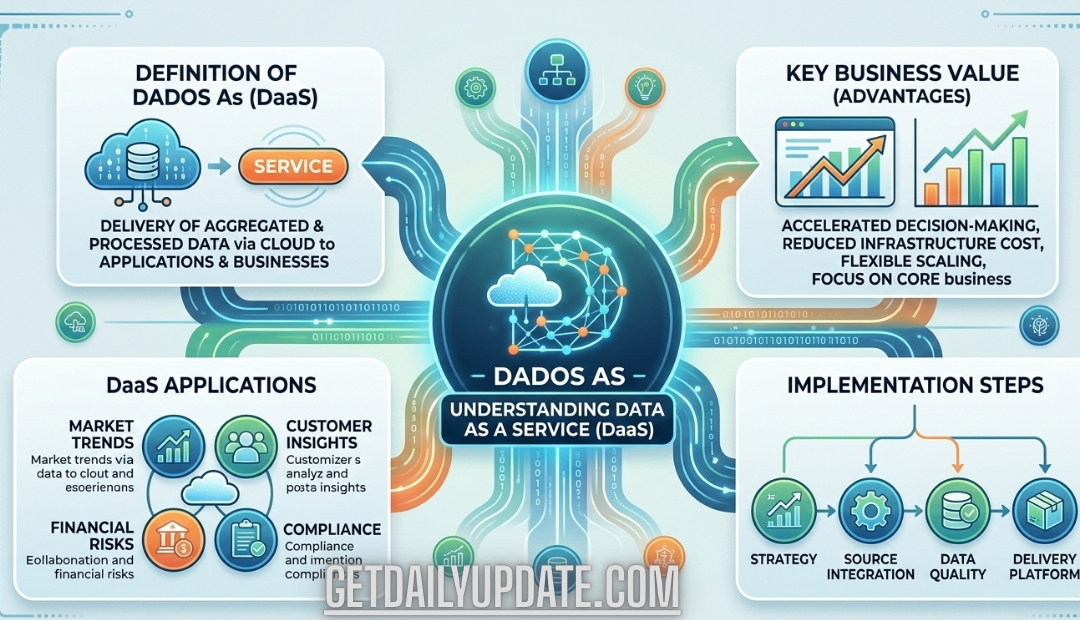
That’s when I first fell in love with the concept of Data as a Service, or DaaS. You might have seen the term “Dados AS” floating around—it’s essentially the same thing: a modern way to handle the chaos of information. In this post, I’m going to break down exactly what it is, how it works, and why your business might need it.
What is Data as a Service (DaaS)?
In the simplest terms, Data as a Service is like subscribing to Netflix, but instead of movies, you get clean, ready-to-use data.
Traditionally, if a company wanted to use data (like customer trends or weather patterns), they had to buy expensive servers, hire a team to clean the data, and build tools to access it. It was like building a whole library just to read one book.
With DaaS, all of that heavy lifting happens in the cloud. A third-party provider collects, cleans, and organizes the data. You just connect to it over the internet, pay a monthly fee, and start using it immediately.
How Is It Different from Traditional Data Management?
The biggest difference is ownership and maintenance. Back in the day, you bought hardware and software. You were responsible for everything.
-
Traditional: You buy a server, install software, hire an IT guy, and hope nothing breaks.
-
DaaS: You pay a subscription. The provider handles the servers, updates, and security. You just log in and grab the data you need.
It’s a shift from owning a car (paying for insurance, gas, repairs) to using a ride-share service (just paying for the trip).
The Business Value: Why Should You Care?
Okay, so it’s convenient. But is it actually valuable for your bottom line? Absolutely. I’ve seen companies save tens of thousands of dollars by switching to a DaaS model.
1. Cost Savings (The “No-Headache” Factor)
This is the big one. When you use Data as a Service, you stop paying for physical storage space, electricity for servers, and expensive IT salaries just to maintain the system. You turn a huge capital expense (buying a server) into a manageable operational expense (a monthly bill). For small and medium businesses, this is a game-changer. It levels the playing field against big corporations with massive IT budgets.
2. Speed and Agility
Remember my story about copying spreadsheets on Monday mornings? DaaS eliminates that. The data is live and updated in real-time.
-
Real-world example: Imagine you run a logistics company. Instead of manually checking weather reports and traffic maps, you subscribe to a DaaS that provides real-time route optimization. Your drivers avoid traffic jams automatically, saving gas and time. That speed gives you a competitive edge.
3. Better Quality Data
One thing that drives me nuts is bad data. You know, when you have two different reports showing different sales numbers for the same day? DaaS providers are experts. Their whole business relies on giving you accurate information. They handle the deduplication, the formatting, and the validation. You get clean, reliable data right out of the gate.
Practical Examples of Data as a Service in Action
It helps to see how real companies use this. Data as a Service isn’t just a tech buzzword; it’s a tool we use every day.
-
Marketing Teams: Ever seen an ad for shoes right after you searched for shoes? That’s often powered by DaaS. Marketing platforms use data services to pull in browsing behavior, purchase history, and demographic info to target ads more effectively.
-
Financial Analysts: Hedge funds and banks use DaaS to get real-time stock prices, news feeds, and economic indicators. They don’t build the news wires themselves; they subscribe to them.
-
Healthcare: Hospitals use data services to access patient records securely across different locations or to tap into global research databases for treatment options.
If you’re curious about how to integrate these systems into your current workflow, check out our guide on [Connecting Cloud Tools to Your CRM] (internal link placeholder). It goes hand-in-hand with adopting DaaS.
How to Know If Your Business Needs DaaS
Not every business needs to jump on the DaaS train immediately. But if these three things sound familiar, it might be time to look into it:
-
You’re drowning in spreadsheets. If your team spends more time collecting data than analyzing it, you have a process problem that DaaS can fix.
-
Your data is siloed. If the sales team has different numbers than the marketing team, you need a single source of truth. DaaS can act as that central hub.
-
You need outside information. If your business relies on external data (like social media trends, economic reports, or supply chain tracking), building a system to capture all that yourself is a nightmare. Subscribe to it instead.
Challenges to Watch Out For
I’m a big fan of DaaS, but I’d be lying if I said it was perfect. There are a couple of things you need to keep an eye on.
Security and Compliance
When you use a third-party service, you are trusting them with your data—or at least, you’re trusting them to connect to your systems. You need to make sure they are compliant with regulations like GDPR or HIPAA. Always ask potential providers: “How is my data protected?” and “Who else has access to it?”
Vendor Lock-In
This is a personal pet peeve of mine. If you build your entire business process around a specific DaaS provider, it can be really hard to switch later. Make sure the provider offers good export tools so you aren’t trapped forever. For more on navigating vendor relationships, take a look at this article on [Choosing the Right Tech Partners] (internal link placeholder).
How to Get Started with DaaS
Ready to dip your toes in? Here’s a simple three-step plan I recommend to friends starting their own businesses:
-
Identify the Pain Point: Don’t buy data just because it’s cool. Find a specific problem. “I need better leads” is a good start. “I need to know which companies are hiring in my area right now” is a specific problem a DaaS can solve.
-
Shop Around: Look for providers that specialize in your industry. There are giants like AWS Data Exchange or Snowflake, but there are also tiny niche providers that have incredible data on specific markets.
-
Start Small: Most services offer a free tier or a trial. Take it for a spin. Connect it to one small part of your business and see if it actually saves you time before you sign a big contract.
Conclusion
We are living in a world where information is power, but managing that information shouldn’t be a full-time job. Data as a Service takes the headache out of data management, giving you clean, fast, and affordable access to the insights you need.
Whether you’re a solopreneur or running a growing team, moving to a DaaS model for at least part of your operations can free up your time to actually use the data, rather than just wrestling with it.
Have you tried using a data service in your business? I’d love to hear about your experiences. Drop a comment below and let me know what tools you’re using. And if you found this helpful, share it with a friend who is still stuck merging spreadsheets on a Monday morning!
If you want to read more information, visit




Leave a Reply