
You know that feeling when you’re sitting in Atlanta traffic—maybe on 285 or crawling through Midtown—and you think, “There has to be a better way to live in a city this cool”?
I’ve lived here long enough to remember when areas like the Westside were places you drove through, not to. But over the last decade, the landscape of our city has shifted faster than a Georgia thunderstorm. We’ve seen cranes take over the skyline, new trails connect our neighborhoods, and suddenly, everyone wants a piece of the Atlanta pie.
But here’s the problem that’s been nagging at me, and probably at you, too: How do we grow without losing our soul?
It’s the classic Atlanta paradox. We want the new restaurants, the bike lanes, and the development. But we don’t want to push out the very people and small businesses that made our neighborhoods special in the first place. We don’t want just growth; we want smart growth.
That’s why I was genuinely excited to dig into the latest vision coming out of the Neatlanta initiative. This isn’t just another development project. It’s a blueprint for how we can move forward without leaving anyone behind. Let’s walk through what this means for us—the people who actually live here, sit in the traffic, and love this city anyway.
What is the “Neatlanta” Vision for Growth?
If you haven’t heard the term Neatlanta floating around yet, it’s a fresh take on an old nickname. But instead of just a shiny rebrand, this initiative focuses on the “meat” of the matter: sustainability and community .
For years, “growth” in Atlanta meant building outward—sprawling into the suburbs with more asphalt and longer commutes. But the Neatlanta approach is different. It’s about looking at the space we already have and asking, “How can we use this better?”
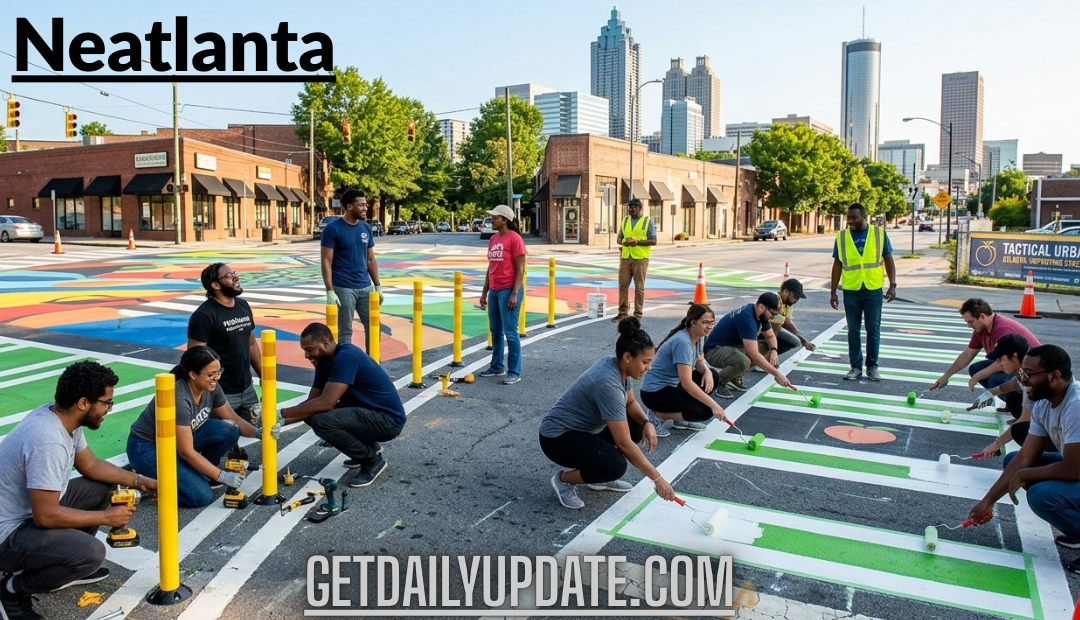
I remember talking to a friend who owns a small shop on the Southside. She told me, “We don’t need giant skyscrapers. We need sidewalks that don’t flood and a reason for people to walk past my door.” That, right there, is the heart of it. The new wave of urban growth is about tactical urbanism—small, impactful changes that make a huge difference in daily life .
Three Pillars of the Community-Focused Approach
So, what does “community-focused” actually look like on the ground? It’s easy for developers to throw that word around. But looking at the recent projects tied to this mindset, three clear priorities stand out.
1. Reclaiming Space for People (Not Just Cars)
We are a car city, I get it. But the most exciting changes are happening where we take space back for pedestrians and cyclists.
Recently, I saw a report about volunteers in Southwest Atlanta literally installing a protected pedestrian lane themselves. Volunteers. With drills and leaf blowers . That’s the energy we need!
This isn’t just about looking cool on a Saturday morning bike ride. It’s about safety. The Atlanta Regional Commission (ARC) has been pumping grant money into projects that focus on “Livable Centers”—places where you can actually walk to get a coffee or catch the MARTA without feeling like you’re taking your life into your own hands .
We’re finally seeing streetscape projects on major roads like Ponce de Leon Avenue and Ralph David Abernathy Boulevard get completed. We’re talking new sidewalks, better lighting, and raised medians to calm traffic . It sounds simple, but these updates are the foundation of a city that cares about its residents.
2. Fighting Displacement with Affordable Housing
Let’s be real for a second. The elephant in the room is always the same: “If you build it, they will come… and my rent will go up.”
It’s a valid fear. The Beltline is a prime example. It’s one of the coolest things Atlanta has ever built, attracting billions in investment, but for a while, it felt like it was only benefiting the wealthy .
The good news? The conversation has shifted. The Neatlanta approach acknowledges that sustainability isn’t just about the environment; it’s about economic sustainability for the people who live here.
We are seeing real moves to fix this. Projects like The Front Porch in the Sweet Auburn district are mixing affordable housing with retail space, aiming to keep the historic character of the neighborhood intact while providing workforce housing . And on the Westside, the new City of Refuge Transformation Center isn’t just building apartments; they’re adding a grocery store, a credit union, and a health clinic . That’s holistic growth.
We’ve also seen innovative projects like Waterworks Village pop up, turning underused city land into rapid housing for those transitioning out of homelessness . It proves that we can use our resources to lift people up.
3. Greening the City, Literally
Sustainability also means green space. I don’t know about you, but after a week in front of a screen, I need some dirt under my fingernails.
Atlanta made history recently by opening its first official urban farm, Red’s Farm Preserve in Ormewood Park. What started as one man’s mission to clean up overgrown lots in the 90s is now a city-supported hub for fresh food and education . To me, that’s the perfect example of community-led growth.
It’s not just farms, either. The city is tackling the “heat island” effect—you know, when it feels 10 degrees hotter in the parking lot of the grocery store than it does in a park? Decatur is currently working on a Heat Mitigation Strategy to figure out how to cool down our neighborhoods with smarter development and more trees . It’s about making our city livable during those sweltering July afternoons.
How You Can Be Part of the Solution
It’s easy to read a blog post, nod your head, and go back to scrolling. But the “Neatlanta” idea only works if we participate. This isn’t something we can leave to the city council and hope for the best.
Here are a few actionable ways to get involved in community-focused urban growth right now:
-
Show Up to Community Meetings: I know, they can be boring. But developers and city officials pay attention when rooms are full. Check the Invest Atlanta or Atlanta Beltline websites for public briefings .
-
Support Local, Always: The new development brings shiny chains, but the character comes from local spots. Hit up the small businesses in the Beltline Marketplace or grab produce from a community urban farm .
-
Get Your Hands Dirty: Look up organizations like PropelATL or Trees Atlanta. They are often organizing volunteer days for planting or even tactical urbanism projects where you can literally help build safer streets .
-
Advocate for “Missing Middle” Housing: When you hear about new projects in your neighborhood, ask the question: “Is this just luxury, or is there room for teachers, firefighters, and young artists?” Supporting projects with affordable units is key .
My Personal Take: I’ll be honest. I was skeptical of the “New Atlanta” for a long time. I missed the gritty spots that got replaced by luxury lofts. But seeing projects like the transformation of the old steel mill site at Atlantic Station into a liveable space—cleaning up the pollution and actually using the land—gives me hope . It shows we can repurpose our past to build a better future, even if the process is messy and slow.
Conclusion: Building an Atlanta We Can All Be Proud Of
The launch of this focused initiative by Neatlanta isn’t a magic wand. We still have massive challenges with traffic, affordability, and making sure the Westside and Southside get the same love as the Eastside.
But for the first time in a while, it feels like the map is drawn correctly. We’re moving away from sprawl and moving toward connection. We’re realizing that a city is only as strong as its neighborhoods, and neighborhoods are only as strong as the people who fight for them.
I’d love to hear your thoughts. Are you seeing positive changes in your part of town? Or are you worried we’re still moving too fast?
Drop a comment below and let me know. And if you want to keep up with how Atlanta is changing (the good, the bad, and the ugly), subscribe to the newsletter. We’re in this together.



Leave a Reply